
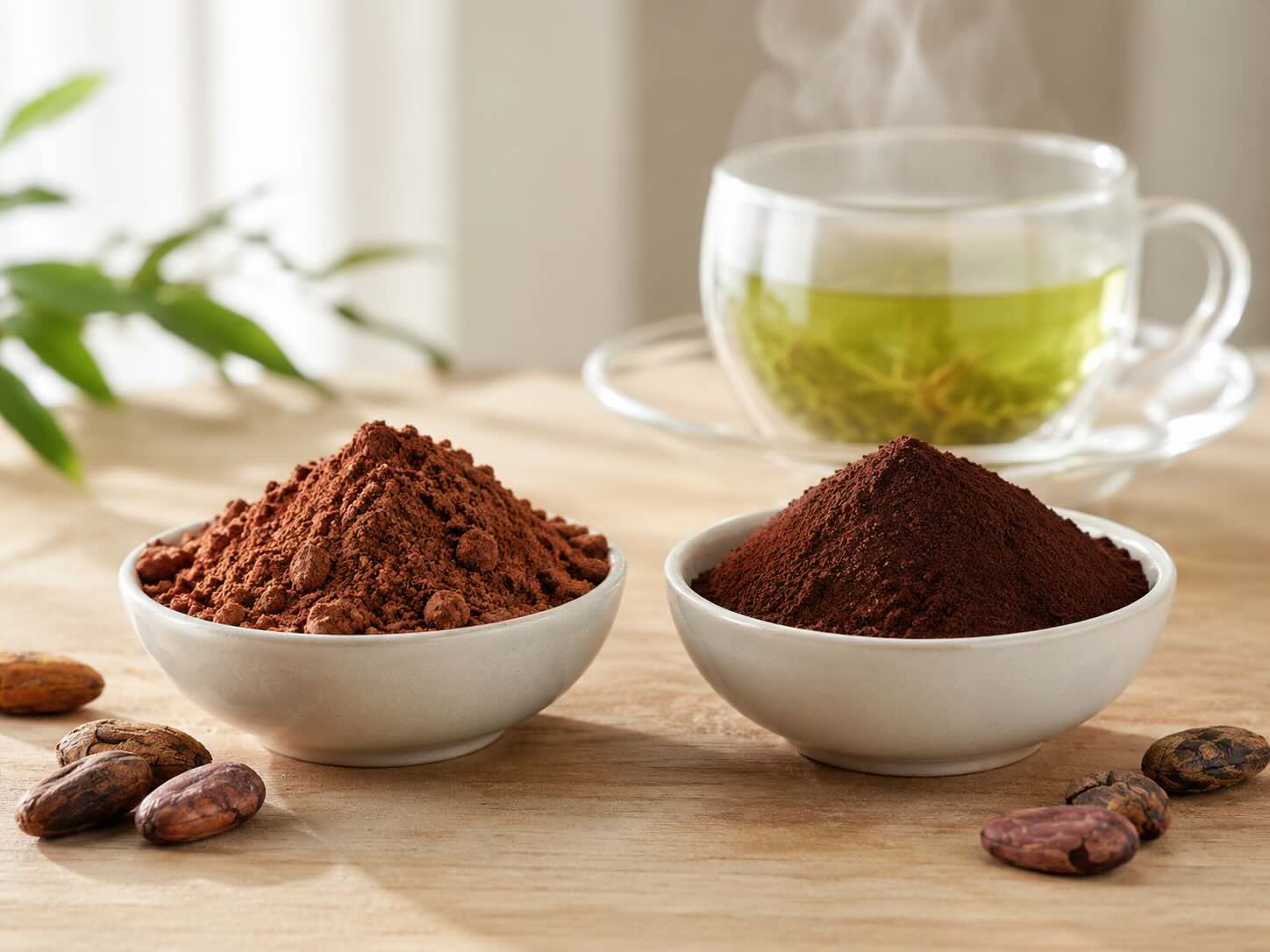
The difference between cacao vs cocoa comes down to one processing step that changes how useful these products are for your heart health.
Key Takeaways
- Cacao and cocoa both come from the same bean. The key difference between them is Dutch processing, which can destroy up to 90% of the beneficial flavan-3-ol antioxidants.
- Neither “cacao” or “cocoa” is regulated on product labels. The only reliable guide to flavan-3-ol content is what else is stated on the packaging.
- Flavan-3-ols from cacao products do not reliably lower LDL-cholesterol. The effect seen in some studies disappears when only higher quality studies are used, though a separate compound in cacao may be doing more work than the research has captured.
- Flavan-3-ols consistently improve blood vessel function and insulin sensitivity, both important factors for long-term heart health.
- Natural cacao powder is a far more efficient source of flavan-3-ols than dark chocolate. Find out how to combine it with other foods to hit your daily target.

PREFER TO WATCH?
Cacao vs Cocoa: Is Only One Good for Your Cholesterol?
Cacao and cocoa are often used interchangeably, but they’re not the same thing when it comes to your heart health. Here’s what you need to know.
What’s the Difference Between Cacao vs Cocoa?
Both “cacao” and “cocoa” refer to products that come from the same source: the Theobroma cacao bean.
“Cacao” typically refers to the fruit and the seed in its raw form, while “cocoa” describes the processed products, such as cocoa powder, cocoa butter, and cocoa nibs.
In recent years, marketeers increasingly use “cacao” to signal products that are less processed and retain more nutrients. The problem is that there are no regulations controlling when either word can appear on a label.
As such, a product labelled “cacao” isn’t necessarily higher in nutrients than one labelled “cocoa.”
So what should you actually be looking for?
What Are Cocoa Flavanols?
There are two groups of compounds in cacao relevant to heart health you should look out for.
The first is a family of antioxidants called flavan-3-ols, also commonly known as flavanols. These belong to the same family of active compounds found in green tea, and they help to protect your blood vessels and support your metabolic health.
The second is theobromine, a mild stimulant with some interesting effects on cholesterol, and I’ll circle back to this later in the article.
How Is Cacao Processed?
After harvesting, cacao beans go through several steps before becoming the cocoa powder you find on supermarket shelves.
The beans are first fermented, then dried, shelled, and lightly roasted. They are then roughly ground and pressed to remove the cocoa butter, before the remaining cake is finely ground again to produce cocoa powder.
When cacao is processed this way, it preserves most of the flavanols. This is also what marketeers try to brand as “cacao” products.
However, most commercial cocoa powders undergo one more step.
How Does Dutch Processing Affect Flavanol Content?
This additional step is called Dutch processing, or alkalization.
Manufacturers use this to reduce bitterness and improve solubility, making cocoa easier to work with when making other products like chocolate.
But this comes at a significant cost to flavanol content, since research shows that Dutch processing can destroy up to 90% of the flavanols.
To put that in perspective, compare the flavanol content:
- 1 g of natural, non-alkalized cacao powder: 34.6 mg
- 1 g of heavily Dutch-processed cocoa powder: 3.9 mg
Given the near nine-fold difference, how should you choose the right product?

How to Choose the Right Product
Since the use of neither “cacao” nor “cocoa” is regulated, the label won’t help you much when choosing the right product.
But there are other clues that we can look for on the packaging.
If a cocoa powder is not Dutch-processed, the maker would want you to know. So look for “not processed with alkali” or “not Dutch-processed” somewhere on the packaging.
If those words are absent, the product has most likely been Dutch-processed and its flavanol content is probably significantly reduced.
So what does the research actually show about cacao and your cholesterol?
Do Cacao and Dark Chocolate Lower LDL-Cholesterol?
This is where the research gets interesting, and where a lot of headlines might be overly optimistic.
A 2011 meta-analysis pooled data from 10 randomised controlled trials and found that dark chocolate and other cocoa products reduced LDL-cholesterol by an average of 5.90 mg/dL (0.15 mmol/L). On the surface, the effect sounds small but is clinically meaningful.
But when the researchers analysed only the five higher-quality studies, the LDL-lowering effect disappeared.
Two meta-analyses from 2012 and 2016 confirmed this pattern. Neither found statistically significant benefits of cocoa lowering LDL-cholesterol once study quality is taken into account.
Why the mixed results?
Why Might the Results Be Mixed? The Theobromine Question
Part of the explanation is the way some of the studies were conducted. In a well-designed experiment, participants, and sometimes even the researchers, should not know who is receiving which intervention.
However, in studies involving chocolate, for example, it’s practically impossible to blind participants to whether they’re eating dark or white chocolate. And this can introduce bias that produces less reliable results.
But there’s a second factor worth considering, and that is theobromine, the other beneficial compound in cacao we mentioned earlier.
This randomised controlled trial found that theobromine lowered LDL-cholesterol by 7.0 mg/dL (0.18 mmol/L) after four weeks. Since researchers didn’t consistently measure or control theobromine content, it may have contributed to the LDL-lowering effects in some studies.
Nonetheless, should we be completely writing off the health benefits of dark chocolate?
Cacao Benefits That Actually Hold Up
The LDL picture may be weaker than headlines suggest, but cacao’s cardiovascular story doesn’t end there.
Blood vessel function. A 2012 meta-analysis of 42 randomised controlled trials found that cocoa products high in flavanols improved flow-mediated dilation (FMD). FMD is a measure of how well your blood vessels function, or expand in response to blood flow.
The meta-analysis showed that long-term FMD improved by 1.34% with cocoa intake. Since healthy FMD in adults typically ranges from 6 to 7%, this is a clinically meaningful improvement.
Insulin sensitivity. A 2016 meta-analysis of 19 randomised controlled trials found that cocoa intake reduced HOMA-IR (homeostatic model assessment for insulin resistance), which is a measure of insulin resistance.
HOMA-IR values above 2.0 indicate insulin resistance, and the analysis showed a reduction of 0.93, which again is a clinically meaningful effect.
A 2019 meta-analysis of 157 trials then confirmed both findings by looking specifically at the effects of flavanols, the active compound in cacao. Using only higher-quality studies, the analysis found that flavanols increased FMD by 1.14% and reduced HOMA-IR by 0.18.
At the same time, it also confirmed the null finding that flavanols had no significant effect on LDL-cholesterol.
Together, all these results show that cacao and dark chocolate have consistent and beneficial effects on improving blood vessel function and insulin sensitivity.
Better blood vessel function means your blood vessels are more responsive and resilient, often also having a positive effect on blood pressure. And better insulin sensitivity reduces the risks of developing diabetes and metabolic syndrome, both risk factors for heart disease.
In short, cacao and dark chocolate can make a difference to your long-term heart health, though not through LDL-cholesterol.
So how do you get the most from cacao every day?

Five Practical Tips to Get the Most From Cacao vs Cocoa
Number 1. Read what is on the packaging.
Look for “not processed with alkali” or “not Dutch-processed” on the packaging. If those words are absent, the product has likely been Dutch-processed and has lost most of its flavanols.
Number 2. Choose natural cacao powder over dark chocolate for daily use.
Around two tablespoons, or 15 g, of natural non-alkalized cacao powder delivers around 520 mg of total flavanols for only around 60 calories.
In comparison, you’d need 50 to 100 g of 70% dark chocolate, which would contain an excessive 275 to 550 calories, plus a significant amount of saturated fat.
Number 3. Pair cacao with foods from the Portfolio Diet.
I have helped many clients lower their LDL-cholesterol significantly using the Portfolio Diet, and natural cacao powder pairs well with a number of Portfolio foods. For example:
- Stir a tablespoon of cacao powder into overnight oats, which are rich in beta-glucan,
- blend it into soymilk, which is rich in isoflavones, together with a handful of almonds, or
- mix it into an avocado smoothie with your favourite berries.
While the Portfolio foods help to lower LDL directly, cacao further supports your long-term heart health by improving your blood vessel health and insulin sensitivity.
Number 4. Be realistic about what dark chocolate can’t do.
Dark chocolate made from non-alkalized cacao is not common and difficult to purchase. If you enjoy dark chocolate, choose something with at least 70% cocoa content.
And remember the “compared to what?” principle. Even regular dark chocolate still contains some antioxidants, and one to two squares a day will be a smarter choice compared to snacking on an ultra-processed biscuit or pastry.
Number 5. Obtain your daily flavanols from a combination of foods.
The current recommended daily target for flavanols is 400 to 600 mg. Cacao is one of the most concentrated sources of flavanols, but so is green tea, with one cup providing around 320 mg.
So, one tablespoon of natural cacao powder in the morning, combined with one to two cups of green tea across the day, puts you comfortably within that daily target range.

Bottom Line: Cacao vs Cocoa for Cholesterol
Cacao vs cocoa is really about how the product was processed. Dutch processing destroys the majority of the beneficial flavanols, so read what’s stated on the packaging to find the right product.
For LDL-cholesterol, the evidence is weaker than what most headlines suggest. But flavanols in cacao and dark chocolate do consistently improve blood vessel function and insulin sensitivity, both important factors for long-term heart health.
If you’re including cacao in your daily routine, natural cacao powder is the most efficient delivery vehicle. Pair it with foods from the Portfolio Diet to also lower your cholesterol, and combine it with green tea to hit your daily flavanol target without the extra calories.
Still Struggling to Move Your Cholesterol Numbers?
If you’ve been trying to lower your cholesterol and your numbers are still not moving, it might be time to look more closely at what’s working, what’s not, and why.
Book a free 15-minute strategy session with me today and get started on a personalised nutrition plan for your heart health.
Watch the YouTube Video
If you’d like to watch a video version of this, click below.
Want to Learn More?
Check out these related YouTube video resources: