
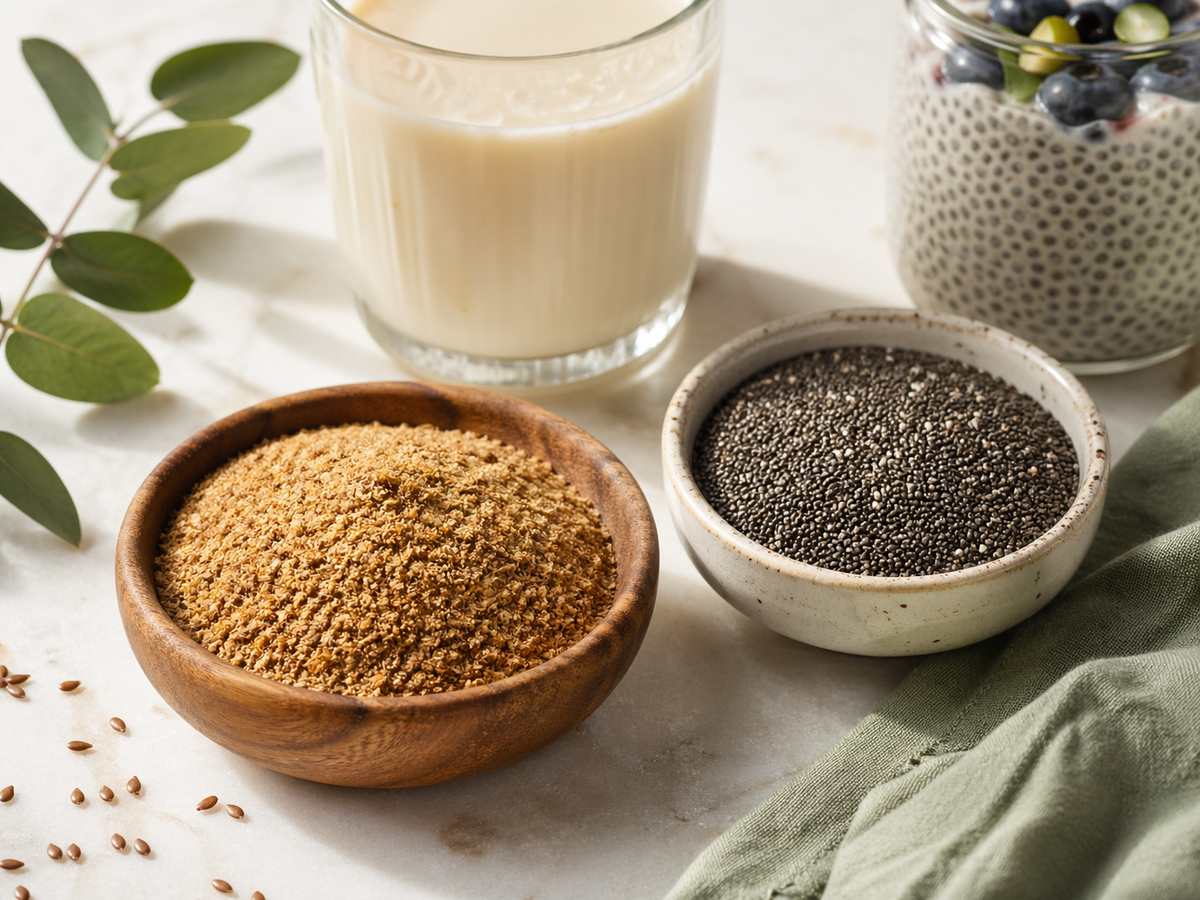
Here’s what the research shows about chia seeds vs flax seeds for cholesterol, and how to use both correctly.
Key Takeaways
- Flaxseeds are the stronger LDL-lowering food. Multiple large meta-analyses consistently show whole or ground flaxseed produces clinically meaningful reductions in LDL-cholesterol. The evidence is some of the strongest for any single food.
- Flaxseed oil does not lower LDL. Despite being widely marketed for heart health, flaxseed oil showed no significant effect on LDL in the same research. The form you eat matters more than most people realise, and the reason why is worth understanding.
- Chia seeds can lower LDL, but the dose matters. Research shows chia seeds need to reach a threshold most people never hit in their daily routine before a significant LDL reduction occurs. At typical everyday amounts, the effect is not statistically meaningful.
- Two mechanisms explain why flaxseeds win. Flaxseeds lower LDL through viscous fiber and lignans: two distinct pathways that chia seeds have significantly less of. Understanding these mechanisms changes how you use both seeds.
- Both seeds belong in your daily routine. Flaxseeds are your primary LDL-targeting food. Chia seeds complement them with selenium, prebiotic fiber, and omega-3s. Scroll down for five practical tips on how to use both correctly.

PREFER TO WATCH?
Chia Seeds vs Flax Seeds: Which Lowers Your Cholesterol?
Chia Seeds vs Flax Seeds: Which Lowers Your Cholesterol?
If you’ve been adding chia seeds or flax seeds to your morning oats hoping to lower your LDL-cholesterol, you’re off to a great start. However, the research shows that these two seeds are not exactly equal when it comes to their LDL-lowering effects. In this article:
- I’ll walk you through what the evidence actually says about how each seed affects your cholesterol,
- explain why the form of flaxseed you eat does matter, and
- give you five practical tips to make sure what you’re eating is actually working.
What Does the Research Say About Flaxseeds and Cholesterol?
Flaxseeds have strong, consistent evidence for lowering LDL-cholesterol. There are at least two major meta-analyses, the gold standard for summarising the evidence from multiple trials, that support this benefit.
A 2009 meta-analysis published in the American Journal of Clinical Nutrition pooled data from 28 randomised controlled trials. It found that whole or ground flaxseed reduced LDL-cholesterol by around 6.2 mg/dL (0.16 mmol/L). Lignan supplements extracted from flaxseed also showed a similar effect.
A larger 2020 meta-analysis published in Pharmacological Research then confirmed and extended these findings from 62 trials. It showed that whole or ground flaxseed reduced LDL by 9.9 mg/dL (0.26 mmol/L), and lignan supplements by 9.0 mg/dL (0.23 mmol/L).
These are clinically meaningful reductions, and the effects were strongest in people with elevated LDL and in postmenopausal women. That is, assuming a baseline LDL-cholesterol level of 160 mg/dL, these results imply a potential reduction in LDL of between 3.9 to 6.2%, just from one food component.
Takeaway: Flaxseeds, whether whole, ground, or as lignan extracts, are one of the most well-evidenced foods for LDL reduction. The research is consistent across dozens of trials.
Why Doesn’t Flaxseed Oil Lower LDL-Cholesterol?
And here’s the surprising finding: flaxseed oil showed no significant effect on LDL in either of these two meta-analyses. So if you’re currently taking flaxseed oil capsules to manage your cholesterol, you’d want to take note of this.
Why might this be the case? The reason comes down to the two mechanisms through which flaxseeds lower LDL.
Mechanism 1: Viscous fiber. Flaxseeds contain viscous fiber that forms a thick gel in the gut, which binds bile acids and promotes their excretion. This signals the liver to draw more LDL-cholesterol out of circulation to produce new bile acids. The overall effect is lowered serum cholesterol levels. This is the same core mechanism as beta-glucan in oats and barley.
Mechanism 2: Lignans. Flaxseeds are one of the richest dietary sources of lignans. These are plant compounds that are in the same broad category of polyphenols that isoflavones in soy foods belong to. Gut bacteria then convert lignans into hormone-like molecules called enterolignans, which can influence how the body produces and clears cholesterol. A small but well-designed randomised controlled trial published in 2013 in the Journal of the American College of Nutrition supports this: participants given a nutrition bar with higher lignan content reduced LDL by around 15%, while participants given an otherwise identical bar with lower lignan content showed no significant effect.
With these two mechanisms in mind, we can now understand why flaxseed oil has no effect on LDL, since both the fiber and the lignans are removed in the oil extraction process. What does remain in flaxseed oil is healthy plant-based omega-3 fatty acids, which have other health benefits, but by themselves do not seem to lower LDL in a clinically meaningful way.
Takeaway: Flaxseed oil is not the same as ground flaxseed. If lowering LDL is your goal, switch from flaxseed oil to ground flaxseed.

Can Chia Seeds Lower Your LDL-Cholesterol?
Chia seeds can lower LDL-cholesterol, but you may need to eat significantly more than is comfortable for most people. The evidence is also less consistent than it is for flaxseeds.
A 2024 meta-analysis of 14 randomised controlled trials found that at typical everyday doses, chia seeds did not produce any significant reduction in LDL. It was only at doses above 35 g per day, roughly 3 to 4 tablespoons, that a meaningful LDL reduction of 4.77 mg/dL was observed.
I myself use only 1.5 tablespoons, or around 15 g, of chia seeds in my overnight oats every morning. This falls well below that threshold, but I’ll explain later why I still choose to do this in my routine.
Takeaway: Chia seeds can lower LDL, but only at higher doses than what most people consume. At typical everyday amounts, don’t expect a significant LDL reduction from chia seeds alone.
Chia Seeds vs Flax Seeds: Why Does Flaxseed Win for LDL?
The difference in their LDL-lowering effects comes down to two things: fiber composition and lignans.
Fiber composition. Per 15-g serving, chia seeds actually contain slightly more total fiber at 5.2 g versus 4.1 g for flaxseeds. However, only around 5 to 10% of chia seeds’ total fiber is soluble. On the other hand, flaxseeds have 20 to 40% soluble fiber. And it is soluble and viscous fiber that forms a thick gel in the gut which drives the bile acid excretion pathway to lower LDL. As such, chia seeds have a lower LDL-lowering ability due to their lower viscous fiber content.
This outcome is supported by a 2025 in vitro study that directly compared the gut fermentation effects of chia seed and flaxseed dietary fibers. The study found that flaxseeds produced roughly twice as much beneficial short-chain fatty acids as chia seeds, again because of their higher proportion of soluble and fermentable fiber. I’m always fascinated by gut microbiota studies, and I look forward to human trials in the future that will back up these results.
Lignans. Chia seeds also contain lignans but at a much lower amount than flaxseeds. Flaxseeds are among the richest dietary sources of lignans of any commonly eaten food, with some estimates putting the lignan content of flaxseeds at 12 to 15 times that of chia seeds. Since lignans appear to be the second key mechanism driving LDL reduction, chia seeds are also lacking this second LDL-lowering pathway compared to flaxseeds.
Takeaway: Flaxseeds have a much stronger LDL-lowering effect compared to chia seeds because of their higher viscous fiber content and significantly higher lignan levels.
How Do Chia Seeds and Flax Seeds Compare Nutritionally?
That said, as with all nuts and seeds, chia seeds and flaxseeds are nutritional powerhouses that share an impressive overlapping nutrient profile. In a 15-g daily serving, both seeds deliver excellent amounts of minerals such as copper, iron, magnesium, manganese, and phosphorus. Flaxseeds also stand out for vitamin B1 at 21% of the daily value per serving, while chia seeds are particularly rich in selenium at 15%. In addition, both seeds provide 1.5 to 2 times the recommended intake of plant-based omega-3 (alpha-linolenic acid, ALA), which is probably where they initially earned their superfood status.

Takeaway: This is why I still include 1.5 tbsp of chia seeds in my daily overnight oats. They may not have significant LDL-lowering effects at this amount, but they still help to add invaluable antioxidant minerals and healthy fats that will support healthy ageing.
How to Eat Chia Seeds vs Flax Seeds to Lower Your Cholesterol
Here are five practical tips to make sure that your daily dose of these two seeds is actually working.
Number 1. Use whole or ground flaxseeds, and not flaxseed oil. The extraction process removes the viscous fiber and lignans that drive LDL reduction. As such, even though flaxseed oil is a good source of plant-based omega-3s, it is not what you want to use if reducing cholesterol is your goal.
Number 2. Grind your flaxseeds. The outer shell of a whole flaxseed is tough. When eaten whole, most of the seeds will pass through your digestive system unabsorbed. Grinding breaks open the shell and not only makes the LDL-lowering viscous fiber and lignans available, but also frees up the vitamins and minerals. You could grind your own in a small blender or coffee grinder, or buy ready-ground flaxseed (which I recommend for convenience). Pro tip: Store ground flaxseed in the fridge to minimise oxidation and maximise nutrients.
Number 3. Aim for at least 20 grams of ground flaxseed per day for cholesterol lowering. That would be around 2 heaping tablespoons. One easy way to hit this target, which is also what I do almost every day, is to mix one tablespoon into your grains at lunch and another at dinner. If you’re having economy rice for lunch, one tablespoon stirred in works just as well. Other easy ways of incorporation include stirring a tablespoon into your overnight oats, morning porridge, smoothie, or yoghurt.
Number 4. Soak chia seeds before eating. Unlike flaxseeds, chia seeds don’t need to be ground, but soaking them in a liquid for 10 to 15 minutes is critical. This allows the soluble fiber to form its characteristic gel around each seed, making the fiber and other nutrients available for use and absorption. A simple routine could be to stir one-and-a-half tablespoons, or about 15 g, of chia seeds into your morning soymilk, plant milk, or even plain water, and let it soak before drinking.
Number 5. Think of chia seeds and flaxseeds as complementary, and not competing with each other. Make ground flaxseed one of your primary LDL-targeting foods as part of the Portfolio Diet, while chia seeds can round out your routine with antioxidant minerals, prebiotic fiber, and omega-3s.
Takeaway: The practical goal is to include at least two heaping tablespoons (20 g) of ground flaxseed daily and around one-and-a-half tablespoons (15 g) of soaked chia seeds. Both can be easily stirred into oats, grains, smoothies, or yoghurt.

The Bottom Line: Chia Seeds vs Flax Seeds for Cholesterol
Flaxseeds have substantially stronger LDL-lowering data than chia seeds, and that difference is driven by their higher viscous fiber content and significantly higher lignan levels. Flaxseed oil does not share these benefits and should not be relied upon to lower cholesterol.
Chia seeds are a valuable addition to your heart health routine, and their antioxidant minerals, prebiotic fiber, and omega-3s further complement what flaxseeds offer.
Understanding what each one does and using them in the right form and the right amount will bolster your collection of foods that will help you age better longer.
Still Struggling to Move Your Cholesterol Numbers?
If you’ve been trying to lower your cholesterol and your numbers are still not moving, it might be time to look more closely at what’s working, what’s not, and why.
Book a free 15-minute strategy session with me today and get started on a personalised nutrition plan for your heart health.
Watch the YouTube Video
If you’d like to watch a video version of this, click below.
Want to Learn More?
Check out these related YouTube video resources: